
Temperature + humidity → dew point, comfort level, absolute humidity & heat index instantly.

Dew point is the temperature at which air must cool to become fully saturated with water vapour — the point at which dew, frost, fog or clouds form. Unlike relative humidity, dew point is an absolute measure of moisture in the air. When you feel "muggy" on a summer day, what you are sensing is a high dew point, not just high humidity.
Imagine a glass of cold water on a humid day. Condensation forms on the outside because the glass surface has cooled the air near it to the dew point, forcing water vapour to condense into liquid. The same physics governs fog rolling in at night, frost forming on car windshields at dawn, and perspiration struggling to evaporate on a tropical afternoon.
This calculator uses the Magnus–Tetens formula, the standard meteorological method for dew point estimation:
γ = ln(RH/100) + 17.625 × T / (243.04 + T)
Td = 243.04 × γ / (17.625 − γ)
Where T is air temperature in °C and RH is relative humidity in %. The formula is accurate to within 0.35 °C for temperatures between −40 °C and 60 °C, making it suitable for everyday weather calculations.
Meteorologists and HVAC engineers use dew point — rather than relative humidity — to rate outdoor comfort because dew point stays constant as air temperature changes. A dew point of 20 °C feels oppressively humid whether the air is 25 °C or 35 °C. Here is the standard comfort scale:
| Dew Point | Relative Humidity (at 30 °C) | Comfort Level |
|---|---|---|
| Below 10 °C (50 °F) | Below ~33 % | Dry & Comfortable |
| 10 – 13 °C (50–55 °F) | ~33–43 % | Comfortable |
| 13 – 16 °C (55–60 °F) | ~43–52 % | Slightly Humid |
| 16 – 18 °C (60–65 °F) | ~52–58 % | Muggy |
| 18 – 21 °C (65–70 °F) | ~58–67 % | Very Humid |
| 21 – 24 °C (70–75 °F) | ~67–79 % | Oppressive |
| Above 24 °C (75 °F) | Above ~79 % | Severely Oppressive |
Data based on the widely cited comfort scale used by the US National Weather Service and atmospheric scientists.
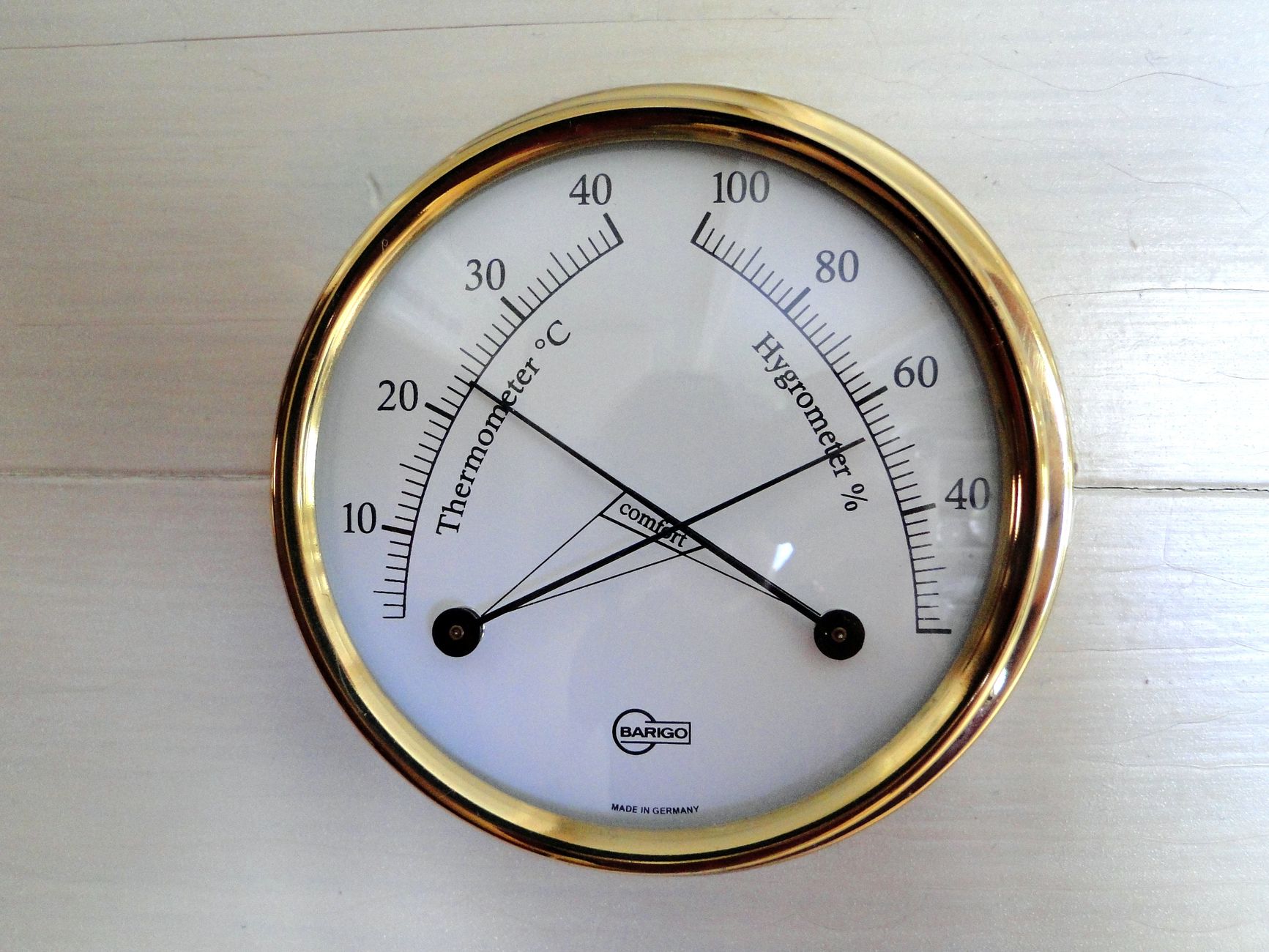
Relative humidity tells you how full the air is relative to its current capacity. A humid winter day at 2 °C with 90 % RH actually holds far less moisture than a 35 °C summer day at 40 % RH. Relative humidity changes every time the temperature changes — even if no moisture is added or removed.
Absolute humidity measures the actual mass of water vapour per cubic metre of air (g/m³), independent of temperature. It is useful for comparing moisture loads between different environments, sizing dehumidifiers and assessing condensation risk. Reference values:
| Temperature | RH 30 % | RH 50 % | RH 70 % | RH 90 % |
|---|---|---|---|---|
| 0 °C (32 °F) | 1.4 g/m³ | 2.4 g/m³ | 3.4 g/m³ | 4.4 g/m³ |
| 10 °C (50 °F) | 2.8 g/m³ | 4.7 g/m³ | 6.6 g/m³ | 8.4 g/m³ |
| 20 °C (68 °F) | 5.2 g/m³ | 8.7 g/m³ | 12.1 g/m³ | 15.6 g/m³ |
| 30 °C (86 °F) | 9.0 g/m³ | 15.1 g/m³ | 21.1 g/m³ | 27.1 g/m³ |
| 40 °C (104 °F) | 15.3 g/m³ | 25.5 g/m³ | 35.7 g/m³ | 45.9 g/m³ |
The heat index (sometimes called "feels like" or "apparent temperature") combines air temperature and relative humidity to estimate how hot the human body actually feels. The body cools itself primarily by evaporating sweat. When relative humidity is high, sweat evaporates more slowly, reducing the cooling effect. A 35 °C day at 80 % RH can feel as hot as 47 °C. This calculator uses the Rothfusz regression, the formula used by the US National Weather Service, valid for air temperatures above 27 °C and humidity above 40 %.
For indoor environments, HVAC engineers target a relative humidity of 40–55 % for comfort and health. Below 30 %, air becomes uncomfortably dry — causing static electricity, dry skin and irritated airways. Above 60 %, moisture can condense on walls and window frames, creating conditions for mold and dust mite growth. If your indoor humidity is frequently above 60 %, a dehumidifier or improved ventilation is recommended.
In HVAC design, dew point is critical for preventing condensation on cold surfaces such as supply air ducts, refrigeration coils and cold water pipes. Designers specify insulation thickness so that the outer surface of the insulation stays above the ambient dew point at all times.
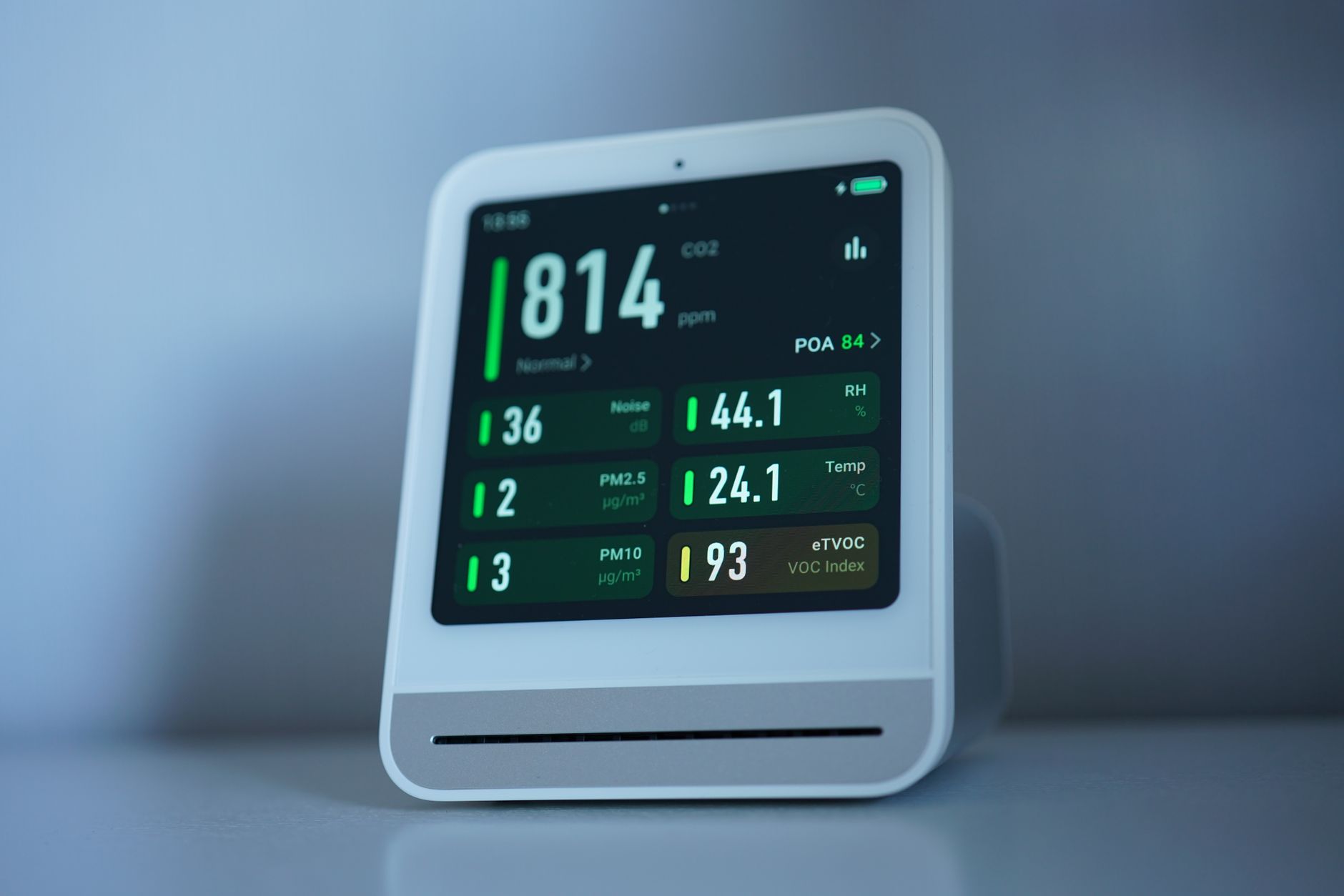
The wet-bulb temperature is the temperature a parcel of air would have if cooled to saturation by the evaporation of water — the principle behind the wet-bulb thermometer used in weather stations. This calculator uses the Stull (2011) approximation, accurate to within 0.65 °C for temperatures between 5 °C and 40 °C and relative humidity between 5 % and 99 %.
Wet-bulb temperature has gained attention in climate science as a threshold for human survival. Research suggests that a wet-bulb temperature above 35 °C is the upper physiological limit for human endurance, even for healthy adults at rest in the shade — no amount of sweating can cool the body in such conditions.
Dew point is the temperature at which air becomes fully saturated with water vapour and water starts to condense on surfaces. Higher dew point means more moisture in the air.
This calculator uses the Magnus formula: Td = (243.04 × γ) / (17.625 − γ), where γ = ln(RH/100) + 17.625 × T / (243.04 + T), T is air temperature in °C and RH is relative humidity in %.
Dew points below 10 °C (50 °F) feel dry and comfortable. Between 10–16 °C (50–60 °F) is pleasant. Above 18 °C (65 °F) starts feeling muggy; above 24 °C (75 °F) is oppressive.
Relative humidity (%) measures how saturated the air is relative to its maximum capacity at the current temperature. Dew point is an absolute temperature — it does not change when air warms up, making it a better measure of actual moisture content.
Absolute humidity is the mass of water vapour per cubic metre of air (g/m³). Unlike relative humidity, it does not depend on air temperature, so it is useful for comparing moisture levels across different temperatures.
The heat index (apparent temperature) combines air temperature and humidity to describe how hot it feels to the human body. High humidity slows sweat evaporation, making hot days feel even hotter. The Rothfusz regression used here is valid above 27 °C and 40 % RH.
Mold typically thrives when relative humidity stays above 60–70 % indoors. A dew point above 15–16 °C indoors usually means surfaces may be damp enough for mold growth. Aim to keep indoor relative humidity below 50–55 %.
No. Dew point can never exceed air temperature. When they are equal, relative humidity is 100 % and the air is fully saturated (fog, clouds or rain will form).