
Enter air temperature and relative humidity to calculate dew point, frost point, absolute humidity and comfort level instantly.

Temperature unit
The dew point is the temperature at which air must be cooled — at constant pressure and moisture content — for water vapour to start condensing into liquid water (dew). It is a direct measure of how much moisture is actually in the air, expressed as a temperature rather than a percentage.
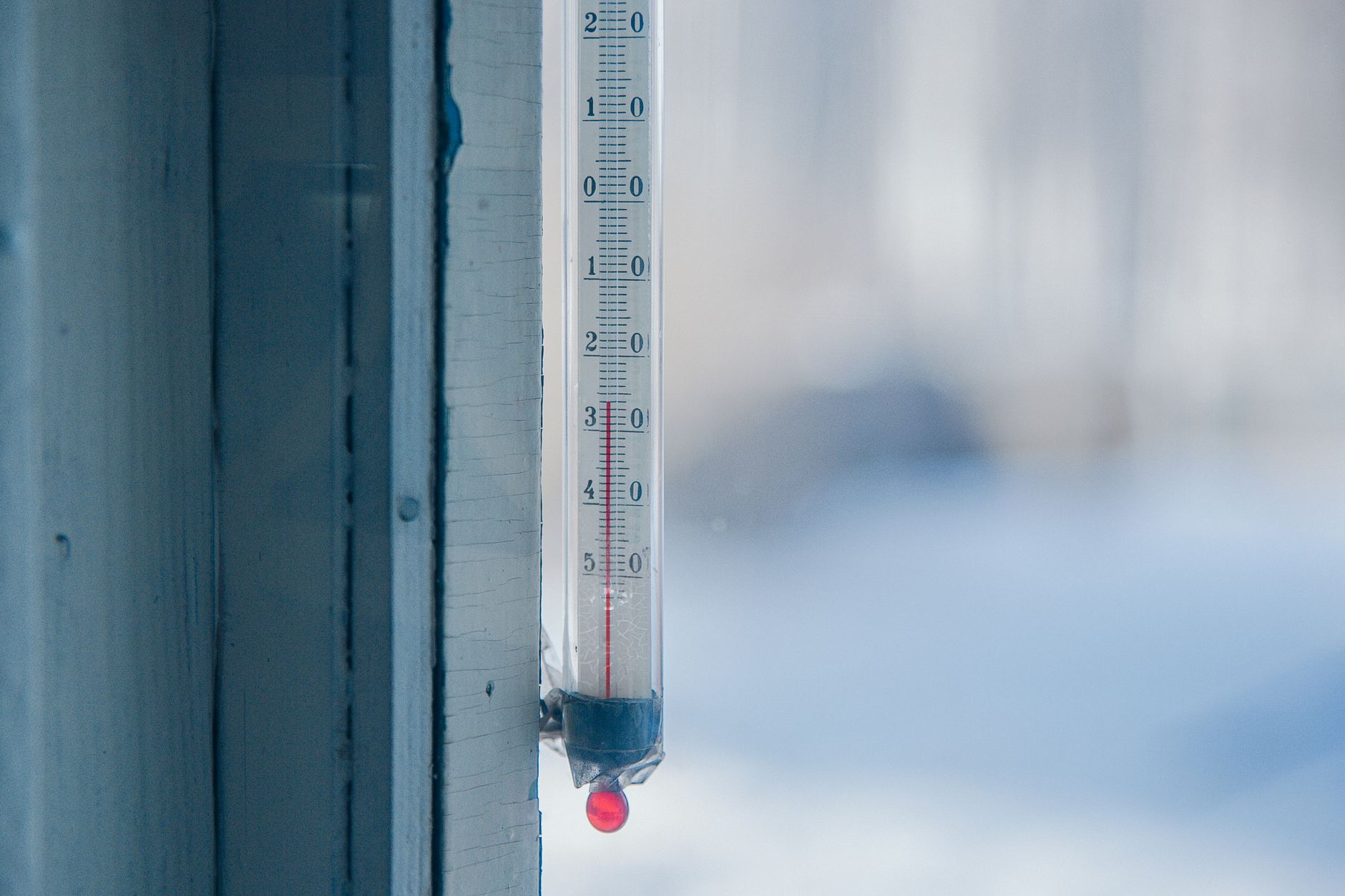
Relative humidity (RH) tells you what percentage of the maximum possible moisture the air currently holds at its current temperature. This makes RH temperature-dependent: the exact same amount of water vapour can give 100% RH at 10°C but only 30% RH at 30°C. The dew point stays constant as temperature changes, making it a far more reliable comfort indicator.
| Dew Point (°C) | Dew Point (°F) | Human Perception |
|---|---|---|
| Below 10°C | Below 50°F | Dry, very comfortable |
| 10 – 12°C | 50 – 54°F | Comfortable |
| 13 – 15°C | 55 – 59°F | Slightly humid, still pleasant |
| 16 – 17°C | 60 – 63°F | Noticeably humid, some discomfort |
| 18 – 20°C | 64 – 68°F | Muggy / oppressive |
| 21 – 24°C | 70 – 75°F | Very oppressive — heat stress risk |
| Above 24°C | Above 75°F | Extremely dangerous; uncommon globally |
Table based on National Weather Service comfort classifications.
This calculator uses the August-Roche-Magnus approximation, accurate to ±0.35°C across the range −40°C to 60°C (Lawrence 2005). The formula is:
γ = ln(RH/100) + (a·T)/(b+T)
Td = b·γ / (a − γ)
where a = 17.625, b = 243.04°C, T in °C, RH in %

The frost point applies when the air temperature is below 0°C. It is the temperature at which ice (frost) forms directly from water vapour — always a degree or two lower than the corresponding dew point at sub-zero temperatures. This calculator automatically shows the frost point when temperatures are below freezing.
Absolute humidity is the actual mass of water vapour per cubic metre of air (g/m³), independent of temperature. It is calculated from the partial vapour pressure using the ideal gas law. Typical values range from 1 g/m³ in cold dry air to 30 g/m³ in hot tropical air.
The wet-bulb temperature is the lowest temperature achievable by evaporative cooling alone. It is critical for human heat stress: a wet-bulb temperature above 35°C (95°F) is unsurvivable for more than a few hours even in fit adults, as the body cannot shed heat fast enough. This calculator uses the Stull (2011) empirical formula, accurate to ±0.65°C.
A dew point below 13°C (55°F) feels comfortable to most people. Between 13–16°C it starts to feel slightly humid. Above 18°C (64°F) it feels muggy and sticky. Above 21°C (70°F) most people find it oppressive, and above 24°C (75°F) conditions become dangerous for outdoor activity.
When the dew point equals the air temperature, relative humidity is 100% and the air is saturated. Any further cooling — even by a fraction of a degree — causes condensation. This produces fog, dew on surfaces, or precipitation depending on scale and location.
Dew point is much more reliable. A relative humidity of 80% at 10°C feels cool and crisp, but 80% RH at 30°C is stifling. The dew point gives you the same number regardless of air temperature, which is why meteorologists prefer it to describe how muggy it feels.
Frost can form whenever the surface temperature drops to or below the frost point (which equals the dew point at 0°C and is slightly lower than the dew point below that). A ground-level frost can occur with air dew points of −3°C to 0°C if the sky is clear and wind is calm, since surfaces radiate heat rapidly at night.
The highest reliably recorded dew point is approximately 35°C (95°F), observed in Dhahran, Saudi Arabia in July 2003. At that level, with an air temperature of 42°C, the heat index was above 80°C — conditions that are lethal within hours without air conditioning.
HVAC engineers use dew point to size dehumidification systems. In humid climates, the latent heat load (removing moisture) can exceed the sensible heat load (lowering temperature). Keeping indoor dew points below 11°C (52°F) prevents mould growth and keeps coil surfaces above their condensation temperature.
Approximately yes. If you know the dry-bulb and wet-bulb temperatures (measured with a sling psychrometer), you can calculate RH and then derive dew point. Alternatively, smartphone weather apps display dew point from nearby weather-station data, accurate to within 1–2°C for most locations.
At night, surfaces (grass, car roofs, leaves) cool by radiating heat to the sky — sometimes to below the air dew point — even as air temperature stays higher. When the surface drops below the dew point, moisture from the adjacent air condenses on it as liquid dew. This process needs clear skies and calm wind; clouds act as a blanket and wind mixes the air.