
Find out exactly what any appliance costs to run — per day, week, month, and year — from its wattage and your electricity rate.
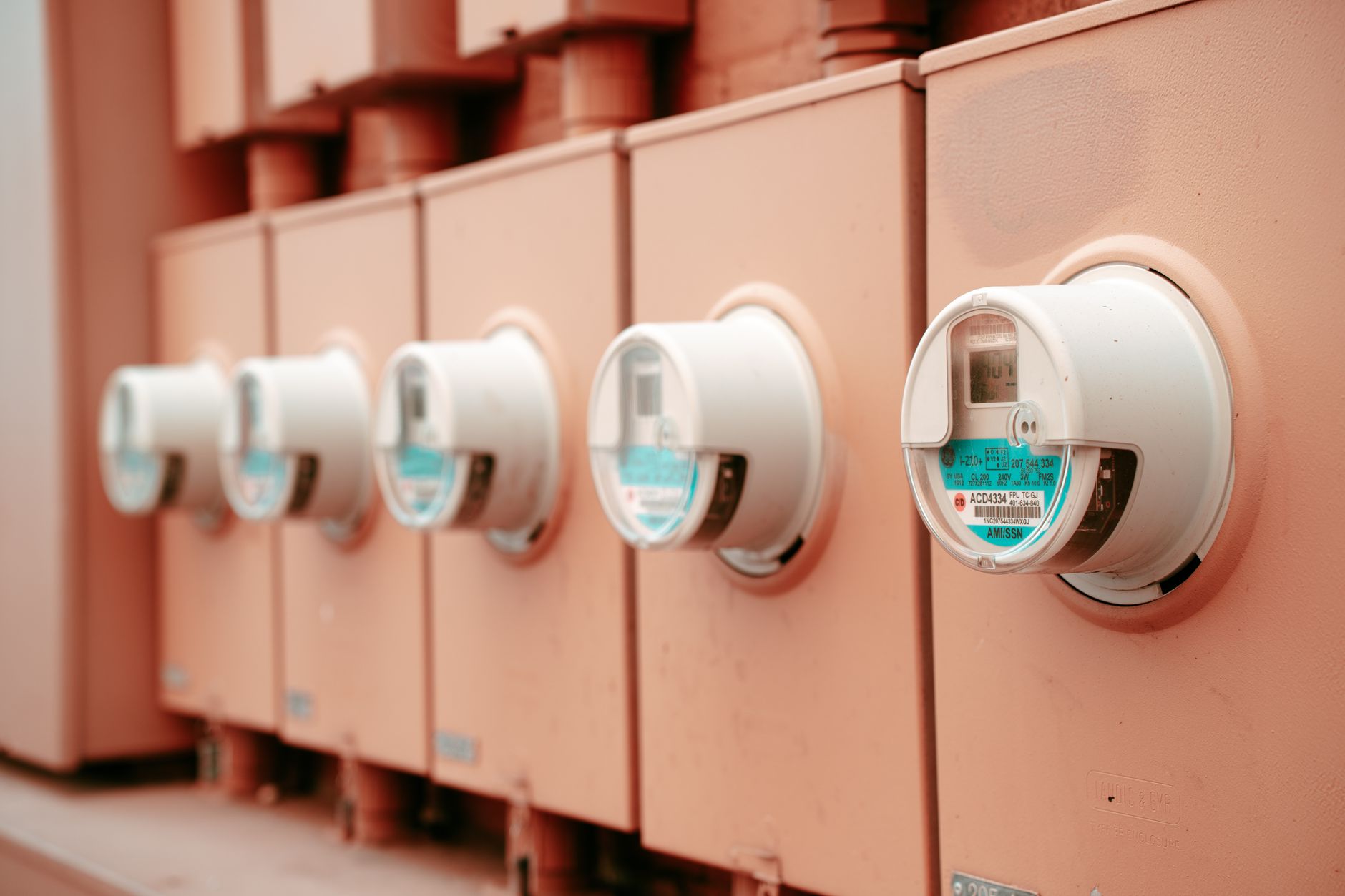

An electricity cost calculator turns an appliance's power rating and usage time into a real dollar figure, so you can see what's actually driving your utility bill instead of guessing. Every appliance in your home has a power rating in watts (W) printed on a label, plug, or spec sheet — but watts alone don't tell you the cost. What matters is how much energy the appliance consumes over time, measured in kilowatt-hours (kWh), which is exactly what your electricity company bills you for.
This is especially useful before buying a new appliance, deciding whether it's worth running a space heater instead of central heating, figuring out if an old refrigerator is quietly costing you more than a new efficient one would save, or simply understanding which habits are worth changing and which barely move the needle.
Wattage tells you the rate of power draw at any instant — like a car's speedometer. Kilowatt-hours tell you the total energy consumed — like the odometer reading after a trip. A 1000-watt appliance running for one hour uses exactly 1 kWh, the same as a 100-watt appliance running for ten hours. Your electricity bill is a straight multiplication of total kWh consumed by your price per kWh, which is why both wattage and time matter equally.
A 1000W window AC unit runs 8 hours a day, 7 days a week, at $0.16/kWh. Daily energy = 1000 × 8 ÷ 1000 = 8 kWh, costing $1.28/day, or roughly $38.90/month for the whole cooling season.
A 65W laptop charges for 6 hours a day, 5 days a week, at $0.16/kWh. Weekly energy = 65 × 6 × 5 ÷ 1000 = 1.95 kWh, costing about $0.31/week, or roughly $1.36/month — a good example of how low-wattage electronics rarely move the needle on a bill.
A refrigerator averages 150W of running power (accounting for compressor cycling) across all 24 hours a day, 7 days a week, at $0.16/kWh. Daily energy = 150 × 24 ÷ 1000 = 3.6 kWh, costing $0.58/day or about $17.60/month — one of the largest single line items in most electricity bills precisely because it never stops running.
| Appliance | Typical power | Typical use | Est. kWh/month | Est. cost/month* |
|---|---|---|---|---|
| LED light bulb | 10 W | 5 h/day | 2 kWh | $0.24 |
| Laptop computer | 65 W | 6 h/day | 12 kWh | $1.90 |
| LED TV (50") | 100 W | 5 h/day | 15 kWh | $2.44 |
| Desktop / gaming PC | 300 W | 4 h/day | 37 kWh | $5.84 |
| Refrigerator (avg. running watts) | 150 W | 24 h/day | 110 kWh | $17.53 |
| Dishwasher | 1200 W | 1 h/day | 37 kWh | $5.84 |
| Washing machine | 500 W | 1 h/day | 15 kWh | $2.44 |
| Clothes dryer | 3000 W | 0.5 h/day | 46 kWh | $7.31 |
| Window air conditioner | 1000 W | 8 h/day | 244 kWh | $38.96 |
| Central air conditioner | 3500 W | 8 h/day | 852 kWh | $136.37 |
| Space heater | 1500 W | 6 h/day | 274 kWh | $43.83 |
| Electric water heater | 4000 W | 3 h/day | 365 kWh | $58.44 |
*Illustrative estimate at $0.16/kWh (US average) and the typical usage hours shown. Enter your own appliance's real wattage and usage in the calculator above for an accurate figure.
Multiply the wattage by the hours it runs, divide by 1000 to get kilowatt-hours (kWh), then multiply by your price per kWh. A 1500W heater running 6 hours at $0.16/kWh costs 1.5 × 6 × $0.16 = $1.44 per day.
Your latest electricity bill usually lists the rate directly, or shows total kWh and total cost so you can divide one by the other. The US average residential rate is around $0.16/kWh, but it varies by state and country.
Watts measure the instantaneous rate of power draw; kilowatt-hours measure total energy used over time. A 1000W appliance running 1 hour uses exactly 1 kWh — power multiplied by time equals energy.
The label shows peak wattage while the compressor is actively running, but the compressor cycles on and off, so average running power is often 30-50% of the rated wattage. Use the average, not the peak, for realistic estimates.
Heat-generating appliances cost the most: water heaters, central AC, space heaters, and clothes dryers. Heating requires far more energy than motion or electronics.
Focus on high-wattage heating/cooling appliances first: adjust thermostats a few degrees, switch to LED lighting, unplug standby devices, and run full loads in dishwashers and washing machines.
Modestly, yes. Many devices draw 1-15W continuously on standby; across a household of a dozen devices running 24/7 this can add several dollars a month.
Often yes for appliances with adjustable draw, like heaters or dimmable lights. It's less true for fridges or washing machines, where "settings" mostly change cycle length rather than instantaneous wattage.