
Find your 5 Karvonen training zones — fat burn, aerobic base, threshold and VO2 max. Free, instant, no sign-up.
Used to estimate max HR via Tanaka formula
Measure in the morning before rising
Override if measured in a lab or field test; otherwise auto-calculated
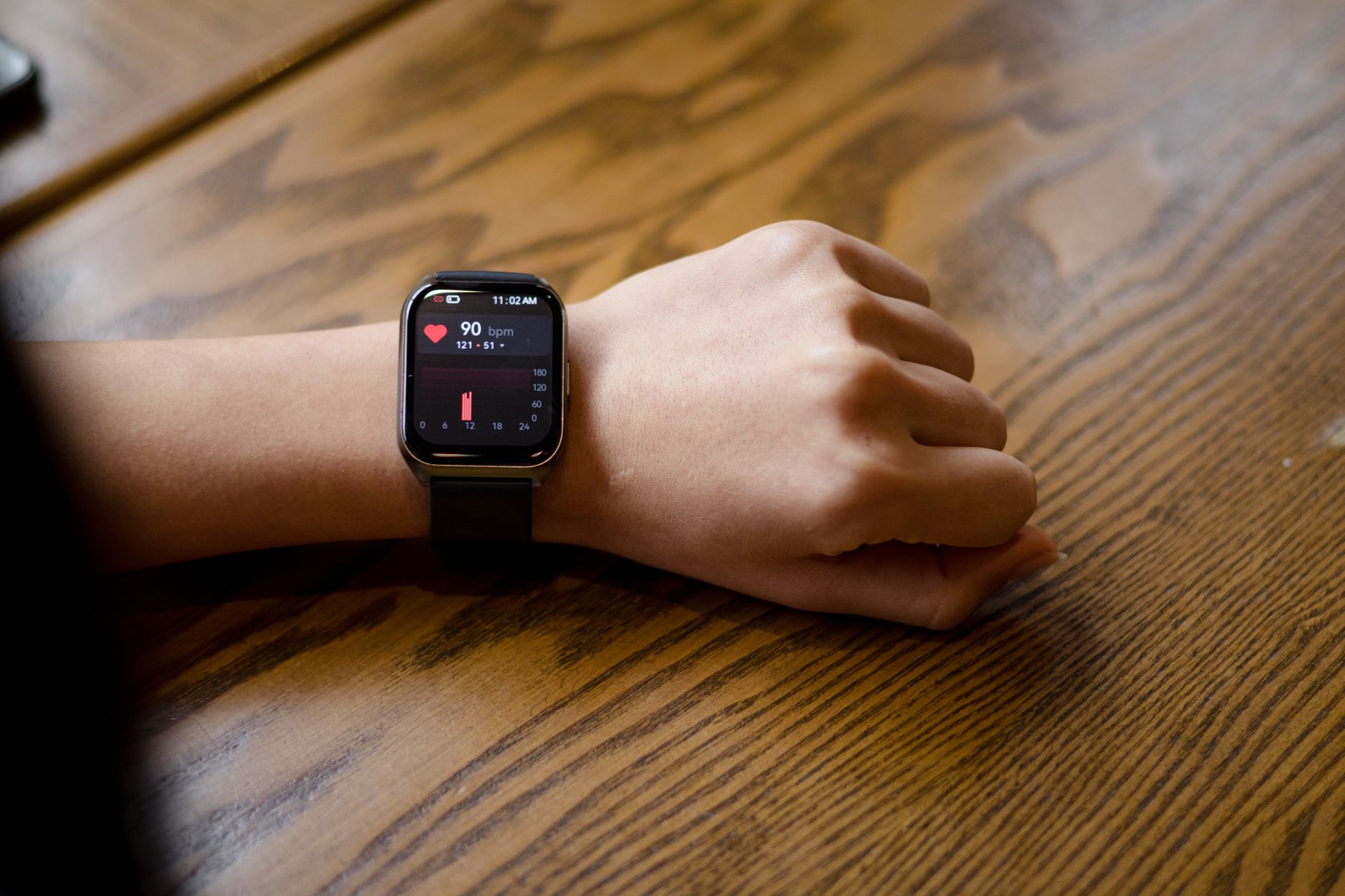
Heart rate training zones divide your exercise intensity into 5 bands, each producing different physiological adaptations. By training in the right zone for your goal, you can build aerobic endurance, burn fat more efficiently, improve your lactate threshold, or push your VO₂ max — without wasting energy in the wrong band.
The 5-zone model used by most coaches and sports scientists is based on percentage of your Heart Rate Reserve (HRR), the difference between your maximum and resting heart rate. This Karvonen method is more individualized than using raw percentage of max HR.
The Tanaka formula (208 − 0.7 × age) is used instead of the older 220 − age because it was derived from a 2001 meta-analysis of 351 studies covering 18,712 subjects and shows significantly lower error, especially for people over 40. If you have measured your actual max HR (via VO₂ max test or supervised field test), always use that value for more accurate zones.
| Zone | % HRR | Purpose | Duration |
|---|---|---|---|
| Zone 1 — Active Recovery | 50–60% | Warm-up, cool-down, recovery walks | Unlimited |
| Zone 2 — Aerobic Base | 60–70% | Fat burning, mitochondria, endurance base | 30 min – 3+ hrs |
| Zone 3 — Aerobic Tempo | 70–80% | Aerobic capacity, race pace for beginners | 20–60 min |
| Zone 4 — Lactate Threshold | 80–90% | Speed, stamina, threshold improvement | 10–30 min |
| Zone 5 — VO₂ Max | 90–100% | Maximum power, speed intervals | 1–5 min intervals |

Your resting heart rate (RHR) is one of the key inputs for the Karvonen formula. To get an accurate reading:
A normal resting heart rate for adults is 60–80 bpm. Highly trained endurance athletes often measure 40–55 bpm. Resting HR above 100 bpm (tachycardia at rest) warrants medical evaluation.
Research on elite endurance athletes consistently shows a polarized training distribution produces the best long-term adaptations:
For beginners, the priority is building Zone 2 endurance. Most recreational athletes spend too much time in Zone 3 (the “junk miles” zone) and not enough time in the polarized extremes. If you can always talk comfortably, you’re in Zone 1–2. If talking is very difficult, you’re in Zone 4+.

Using raw percentages of maximum heart rate (e.g., “Zone 2 = 60–70% of Max HR”) ignores your starting point. Two people with the same max HR of 190 bpm but different resting HRs of 45 bpm (athlete) and 75 bpm (sedentary) have very different HRR values — 145 vs 115. Their Zone 2 ranges are meaningfully different:
The Karvonen method correctly assigns higher absolute zones to the athlete whose heart works in a wider operating range, reflecting their superior cardiovascular fitness.
Heart rate training zones divide exercise intensity into 5 bands (Zone 1–5) based on percentage of Heart Rate Reserve or max HR. Each zone produces different training effects: fat oxidation in Zones 1–2, lactate threshold improvement in Zone 4, VO₂ max in Zone 5.
Karvonen target HR = Resting HR + (intensity % × Heart Rate Reserve). HRR = Max HR − Resting HR. This personalized method accounts for your baseline fitness level, unlike raw % of max HR calculations.
Age-based estimates (Tanaka: 208 − 0.7 × age) are reasonable starting points. For precision, do a supervised maximal exercise test: warm up, then run hard for 3 min, rest 90 s, then sprint all-out for 3 min. Your peak HR during the final sprint is your practical maximum.
Zone 2 burns the highest percentage of fat (65–85% of calories from fat). Zone 4–5 burns more total calories per minute. For fat loss, a mix of Zone 2 long sessions and Zone 4–5 intervals gives best results.
60–80 bpm is normal for adults. Athletes often measure 40–60 bpm. Measure in the morning before getting up; stand and your HR rises 5–10 bpm immediately. Use a 60-second pulse count or wearable average for accuracy.
The polarized 80/20 split is evidence-based: 80% of weekly volume in Zones 1–2, 20% in Zones 4–5. Avoid spending most time in Zone 3 (the grey zone) — it accumulates fatigue without the top-end adaptations of Zones 4–5.
HRR = Max HR − Resting HR. It represents your cardiovascular working range. A person with Max 190 and Resting 60 has HRR = 130 bpm. Zone targets are calculated as percentages of this range, added to the resting HR baseline.
Yes, but note max HR is sport-specific. Running typically produces the highest HR; cycling is 5–10 bpm lower; swimming 10–15 bpm lower due to horizontal position and cooler water temperature. Use sport-specific max HR values for best accuracy.