
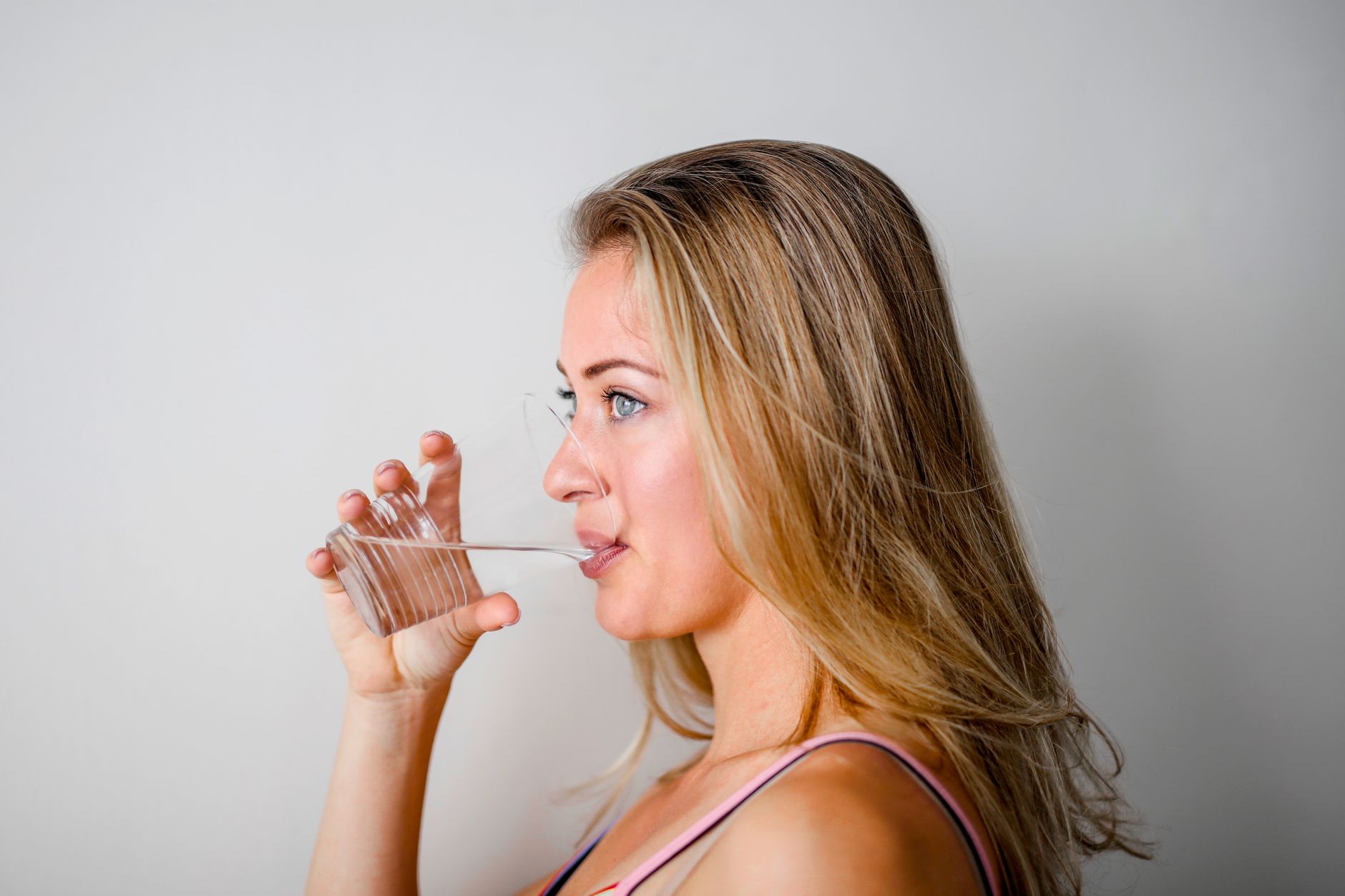
Formula: IOM / EFSA guidelines — weight(kg) × 0.033 L + sex adjustment + activity bonus + climate bonus.
The most widely cited scientific reference for daily water comes from the Institute of Medicine (IOM) and the European Food Safety Authority (EFSA). Their headline figures — 3.7 L/day for men and 2.7 L/day for women — cover all fluid sources, including beverages and the water naturally found in food (≈20% of total intake).
For a personalised estimate, the weight-based formula is the most practical approach:
Water (L) = body weight (kg) × 0.033Example: A 70 kg man, moderately active, temperate climate: 70 × 0.033 + 0.35 = 2.66 L (≈ 11 glasses). Same woman: 2.36 L (≈ 9 glasses).
Baseline at rest (sedentary, temperate, male). Women: subtract 0.3 L. Add activity and climate bonuses above.
| Weight (kg) | Weight (lbs) | Base (L/day) | Glasses (250 ml) | US fl oz |
|---|---|---|---|---|
| 40 kg | 88 lbs | 1.32 L | 5–6 | 44 oz |
| 45 kg | 99 lbs | 1.49 L | 6 | 50 oz |
| 50 kg | 110 lbs | 1.65 L | 6–7 | 56 oz |
| 55 kg | 121 lbs | 1.82 L | 7 | 61 oz |
| 60 kg | 132 lbs | 1.98 L | 8 | 67 oz |
| 65 kg | 143 lbs | 2.15 L | 8–9 | 73 oz |
| 70 kg | 154 lbs | 2.31 L | 9 | 78 oz |
| 75 kg | 165 lbs | 2.48 L | 10 | 84 oz |
| 80 kg | 176 lbs | 2.64 L | 11 | 89 oz |
| 85 kg | 187 lbs | 2.81 L | 11 | 95 oz |
| 90 kg | 198 lbs | 2.97 L | 12 | 100 oz |
| 95 kg | 209 lbs | 3.14 L | 12–13 | 106 oz |
| 100 kg | 220 lbs | 3.30 L | 13 | 112 oz |
| 110 kg | 243 lbs | 3.63 L | 14–15 | 123 oz |
| 120 kg | 265 lbs | 3.96 L | 16 | 134 oz |
| 130 kg | 287 lbs | 4.29 L | 17 | 145 oz |
| 140 kg | 309 lbs | 4.62 L | 18–19 | 156 oz |
Note: add +0.35–1.0 L for activity, +0.4 L for hot/humid climate. Women subtract approximately 0.3 L from the base.
Biological differences in body composition explain why male water requirements are typically higher. Men average ~60% muscle mass (which holds more water) vs ~52% for women. The IOM's formal daily adequate intake figures (from all sources) are:
| Group | Total Water (AI) | From Beverages | From Food |
|---|---|---|---|
| Men 19–50 | 3.7 L / day | ~3.0 L | ~0.7 L |
| Women 19–50 | 2.7 L / day | ~2.2 L | ~0.5 L |
| Pregnant women | 3.0 L / day | ~2.3 L | ~0.7 L |
| Breastfeeding | 3.8 L / day | ~3.1 L | ~0.7 L |
| Boys 14–18 | 3.3 L / day | ~2.6 L | ~0.7 L |
| Girls 14–18 | 2.3 L / day | ~1.8 L | ~0.5 L |
Source: Institute of Medicine, Dietary Reference Intakes for Water, Potassium, Sodium, Chloride, and Sulfate (2005), updated recommendations validated through 2024.
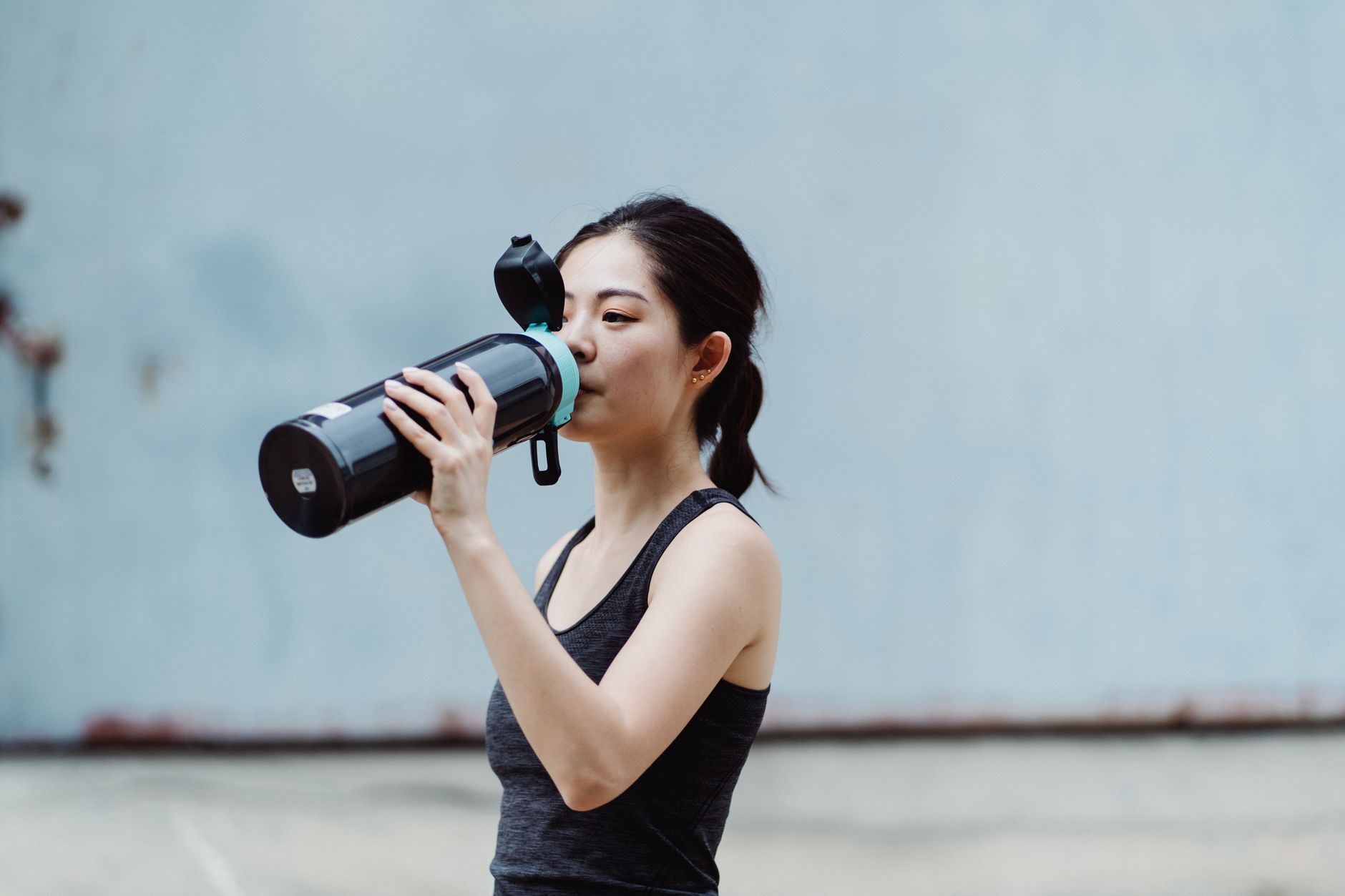
Sweat is the body's primary cooling mechanism and dramatically increases water requirements. A vigorous 60-minute workout can produce 0.5–2 L of sweat depending on intensity, temperature, and individual variation.
| Activity Level | Example | Extra Water / Day | Additional Glasses |
|---|---|---|---|
| Sedentary | Desk job, car commute, TV evenings | +0 L | 0 |
| Moderate (3–4×/week) | 30–45 min gym, yoga, cycling | +0.35 L | +1–2 |
| Active (daily exercise) | Daily jogging, HIIT, team sports | +0.60 L | +2–3 |
| Very Active (athlete) | 2× daily training, manual labour, marathon prep | +1.0 L | +4 |
The American College of Sports Medicine (ACSM) also recommends drinking 500 ml 2 hours before exercise and rehydrating with 1.5× the fluid lost during activity (measured by pre/post weight difference).
For sessions lasting longer than 60 minutes in the heat, plain water may not be sufficient — electrolyte drinks help replace sodium lost through sweat, preventing hyponatraemia.
Rare in the general population but a real risk for endurance athletes who drink large volumes of plain water without sodium replacement:
Prevention: match intake to thirst during long events; use electrolyte drinks for exercise over 90 minutes.

About 20–28% of daily water intake typically comes from food (National Academies of Sciences). A diet rich in fruits and vegetables meaningfully reduces your need for plain water.
| Food | Water Content | Serving (100 g) | Water Provided |
|---|---|---|---|
| Cucumber | 96% | 100 g | 96 ml |
| Iceberg Lettuce | 95% | 100 g | 95 ml |
| Celery | 95% | 100 g | 95 ml |
| Tomato | 94% | 100 g | 94 ml |
| Spinach | 93% | 100 g | 93 ml |
| Watermelon | 92% | 100 g | 92 ml |
| Strawberries | 91% | 100 g | 91 ml |
| Peach | 89% | 100 g | 89 ml |
| Orange | 87% | 100 g | 87 ml |
| Apple | 85% | 100 g | 85 ml |
| Broccoli | 90% | 100 g | 90 ml |
| Plain yogurt | 85% | 100 g | 85 ml |
A mixed salad (200 g) plus one piece of fruit contributes roughly 350–400 ml — more than a standard glass. Soups, herbal teas, and milk also count.
Most adults need 2–3.5 litres (8–14 cups) per day depending on body weight, activity, and climate. The Institute of Medicine recommends approximately 3.7 L for men and 2.7 L for women from all sources including food. Use this calculator for a personalised estimate.
The "8×8 rule" (eight 8-oz glasses ≈ 1.9 L) is a simplified guideline with little scientific backing as a universal requirement. Individual needs vary significantly by weight, activity, age, and climate — a 90 kg active person in a hot climate may need over 4 L/day. Use a weight-based calculator for accuracy.
Yes. Despite mild diuretic effects, research shows caffeinated beverages contribute to net hydration. However, plain water is optimal — beverages with sugar, caffeine, or alcohol may have other effects you need to consider.
The American Council on Exercise recommends drinking 500–600 ml 2–3 hours before exercise, 150–250 ml every 15–20 minutes during activity, and approximately 500 ml for every 0.5 kg of body weight lost through sweat.
Common signs include thirst, dark yellow urine, dry mouth, fatigue, headache, and reduced concentration. Even 1–2% body water loss can impair cognitive and physical performance. Urine colour is the easiest real-time indicator.
Yes — overhydration (hyponatraemia) causes dangerously low blood sodium. It is rare in the general population but a real risk for endurance athletes who drink large volumes of plain water without replacing electrolytes during events lasting over 90 minutes.
Absolutely. Cucumber (96% water), watermelon (92%), strawberries (91%), and leafy greens (85–95%) contribute meaningfully to daily hydration. About 20% of daily water intake typically comes from food according to the National Academies of Sciences.
Yes. In hot or humid climates you can lose an additional 0.5–1.5 L per hour through sweating. This calculator adds 0.4 L for hot/humid conditions. For intense outdoor activity, consider electrolyte drinks to replace sodium lost in sweat.
Older adults (65+) have a diminished thirst sensation, making dehydration a greater risk. Children aged 9–13 need approximately 1.6–2.1 L/day; teenagers 2.1–3.3 L/day; adults 2.7–3.7 L/day from all sources. The calculator currently optimises for adults — children and seniors should consult a healthcare provider.
Drinking 500 ml of water 30 minutes before meals can reduce calorie intake by up to 13% according to a 2016 RCT (Parretti et al., Obesity). Adequate hydration also prevents mistaking thirst for hunger. There is no magic quantity — start with your weight-based baseline and stay consistently hydrated throughout the day.
The simplest method is a 1-litre bottle with time markers (halfway by noon). Apps like WaterMinder (iOS/Android) or Hydro Coach (Android) send smart reminders based on your activity. The urine colour check — aiming for pale straw yellow — is a free, reliable real-time indicator available at any time.
Pregnant women need an extra 300 ml/day above their normal baseline (IOM recommendation: 3.0 L total/day). Breastfeeding women need approximately 700 ml/day extra to cover fluid transferred in breast milk (IOM: 3.8 L/day total). Always consult a healthcare provider for personalised guidance during pregnancy and lactation.