
Find your ideal bedtime or wake-up time based on 90-minute sleep cycles — wake up refreshed every morning.
| Stage | Name | Duration | What Happens |
|---|---|---|---|
| N1 | Light sleep | 1–7 min | Transition from wakefulness; easy to wake |
| N2 | Light sleep | 10–25 min | Heart rate slows, sleep spindles appear; memory consolidation begins |
| N3 | Deep sleep (SWS) | 20–40 min | Hardest to wake; tissue repair, immune function, growth hormone release |
| REM | REM sleep | 10–60 min | Dreaming; emotional processing, creativity, procedural memory |
One full cycle (N1→N2→N3→REM) ≈ 90 minutes. Deep sleep dominates early cycles; REM extends in later cycles.
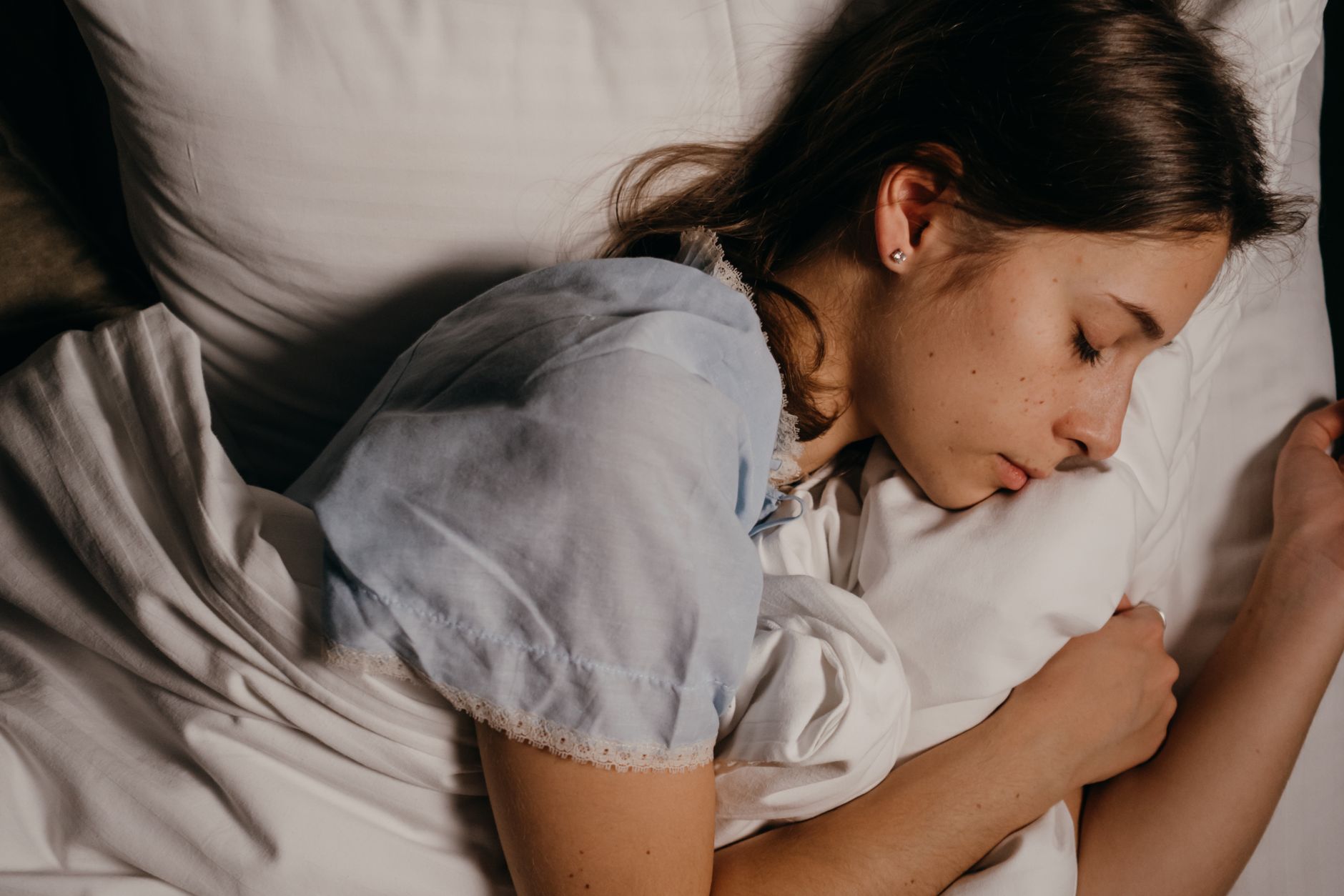
Each night, your brain cycles through four distinct sleep stages in roughly 90-minute blocks. A complete cycle moves from light sleep (N1), into stable light sleep (N2), down into the restorative deep slow-wave sleep (N3), and finally into the vivid dreaming state of REM (Rapid Eye Movement) sleep. Most adults complete four to six of these cycles per night, with the exact pattern shifting as the night progresses: deep sleep dominates the first two cycles, while REM sleep lengthens dramatically in the final cycles before waking.
Understanding this rhythm matters because sleep inertia — the groggy, disoriented feeling after waking — is far more severe when the alarm interrupts deep sleep (N3). If you wake during N3, your body must abruptly halt hormonal processes, including growth hormone secretion, which are tightly linked to that stage. Waking naturally at the end of a REM phase, when sleep is at its lightest, feels completely different: alertness arrives within minutes rather than requiring coffee to overcome.
The 90-minute figure is an average derived from decades of polysomnography research. Individual cycle length varies from about 80 to 110 minutes, and tends to shorten slightly with age. For practical planning purposes, 90 minutes is the most widely validated estimate. If you consistently feel groggy even when waking at a "cycle boundary," try shifting your alarm by 10 minutes earlier or later to better match your personal cycle length.
The American Academy of Sleep Medicine and the Sleep Research Society recommend 7–9 hours per night for adults aged 18–64, and 7–8 hours for adults 65 and older. Those targets correspond to roughly 5–6 complete cycles. Teenagers need 8–10 hours (5–7 cycles); school-age children need 9–12 hours. Consistently sleeping fewer than 7 hours is associated with elevated risks of obesity, diabetes, cardiovascular disease, depression and impaired immune response.
That said, sleep need is genuinely individual. A small fraction of adults — estimated at under 3% — carry a rare gene variant (DEC2) that allows them to function well on 6 hours or fewer. For everyone else, chronic short sleep accumulates a "sleep debt" that cannot be fully repaid in a single long sleep session; sustained adequate sleep is far more effective than sporadic "catch-up" nights.
The calculator adds 14 minutes by default for sleep onset latency — the time it takes to fall asleep after lying down. Research shows the median adult takes 10–20 minutes to transition from wakefulness to N1 sleep. If you fall asleep very quickly (under 5 minutes), reducing this number will give you more accurate results; if it consistently takes you 20–30 minutes, increase it. Very fast sleep onset (under 5 minutes every night) can actually be a sign of sleep deprivation, not efficiency.

Your circadian rhythm is anchored primarily by your wake time, not your bedtime. Setting a fixed alarm even on weekends — within 30 minutes of your weekday time — stabilizes your body clock more powerfully than any supplement or sleep hygiene trick. After 2–3 weeks of consistency, most people find they naturally become sleepy at the right bedtime without needing to force it.
Blue-wavelength light from screens suppresses melatonin production — the hormone that signals to your brain that it is time to sleep. Using night mode, amber-tinted glasses, or simply dimming overhead lights for the hour before bed can raise melatonin levels enough to shorten sleep onset latency by 10–20 minutes, giving you an extra partial or full sleep cycle over a typical week.
Core body temperature must drop 1–2°C for sleep to initiate and for deep sleep to deepen. A bedroom that stays below 19°C (67°F) supports this drop. A warm shower 1–2 hours before bed paradoxically helps: it raises skin temperature, triggering the body to radiate heat rapidly, which accelerates the core temperature drop needed to enter N3 sleep.
Caffeine has a half-life of about 5–6 hours. A 200 mg coffee at 3 PM leaves 100 mg in your system at 8–9 PM — enough to significantly reduce N3 deep sleep even if you feel that you fall asleep normally. Deep sleep is the most restorative stage; blunting it by 20–30% is one of the most common and invisible sources of daytime fatigue.
A short nap of 15–20 minutes (set an alarm for 25–30 minutes to allow onset time) keeps you in N1–N2 light sleep, delivering alertness without post-nap grogginess. The ideal nap window is between 1–3 PM, when a natural circadian dip occurs. A 90-minute nap gives one full cycle if you genuinely need recovery sleep, but can reduce night-time sleep pressure if taken too late. Avoid napping after 4 PM.
Quick reference for the most common wake-up times. All bedtimes add 14 minutes for sleep onset.
| Wake-up time | 6 cycles (9h) | 5 cycles (7.5h) | 4 cycles (6h) |
|---|---|---|---|
| 5:00 AM | 7:46 PM | 9:16 PM | 10:46 PM |
| 5:30 AM | 8:16 PM | 9:46 PM | 11:16 PM |
| 6:00 AM | 8:46 PM | 10:16 PM | 11:46 PM |
| 6:30 AM | 9:16 PM | 10:46 PM | 12:16 AM |
| 7:00 AM | 9:46 PM | 11:16 PM | 12:46 AM |
| 7:30 AM | 10:16 PM | 11:46 PM | 1:16 AM |
| 8:00 AM | 10:46 PM | 12:16 AM | 1:46 AM |
One complete sleep cycle lasts approximately 90 minutes and includes light sleep (N1, N2), deep sleep (N3) and REM sleep. Adults typically complete 4–6 cycles per night.
Sleep inertia — grogginess after waking — is much stronger when you wake from deep sleep (N3). Waking at the end of a REM phase, when sleep is lightest, means your body is naturally closer to consciousness, so you feel alert immediately.
Most adults need 5–6 complete cycles (7.5–9 hours) per night. 4 cycles (6 hours) is a minimum for most people; 3 cycles is insufficient for sustained health. Teenagers and children need more.
The average adult takes about 10–20 minutes to fall asleep after lying down. The calculator uses 14 minutes (the scientific median) as the default sleep onset latency so the cycle count reflects actual sleep, not just time in bed.
A sleep cycle has 4 stages: N1 (light sleep, 1–5 min), N2 (light sleep, 10–25 min), N3 (deep/slow-wave sleep, 20–40 min) and REM sleep (dreaming, 10–60 min). Deep sleep dominates early in the night; REM dominates later cycles.
Yes. A 20-minute power nap stays in light sleep (N1/N2), avoiding grogginess. A 90-minute nap gives you one full cycle including REM. Avoid waking mid-cycle from 30–80 minutes, which produces the worst grogginess.
For most adults, 6 hours (4 cycles) is below the recommended 7–9 hours. Short-term it is manageable; chronically it impairs cognition, immune function and metabolism. 7.5 hours (5 cycles) is generally the minimum for sustained health.
If you want to wake at 6:00 AM, ideal bedtimes are 8:46 PM (6 cycles, 9h), 10:16 PM (5 cycles, 7.5h) or 11:46 PM (4 cycles, 6h). All add 14 minutes for falling asleep so you complete full 90-minute cycles.