
Add sales tax to a price, or remove it from a tax-included total. Pick your US state or enter any rate.
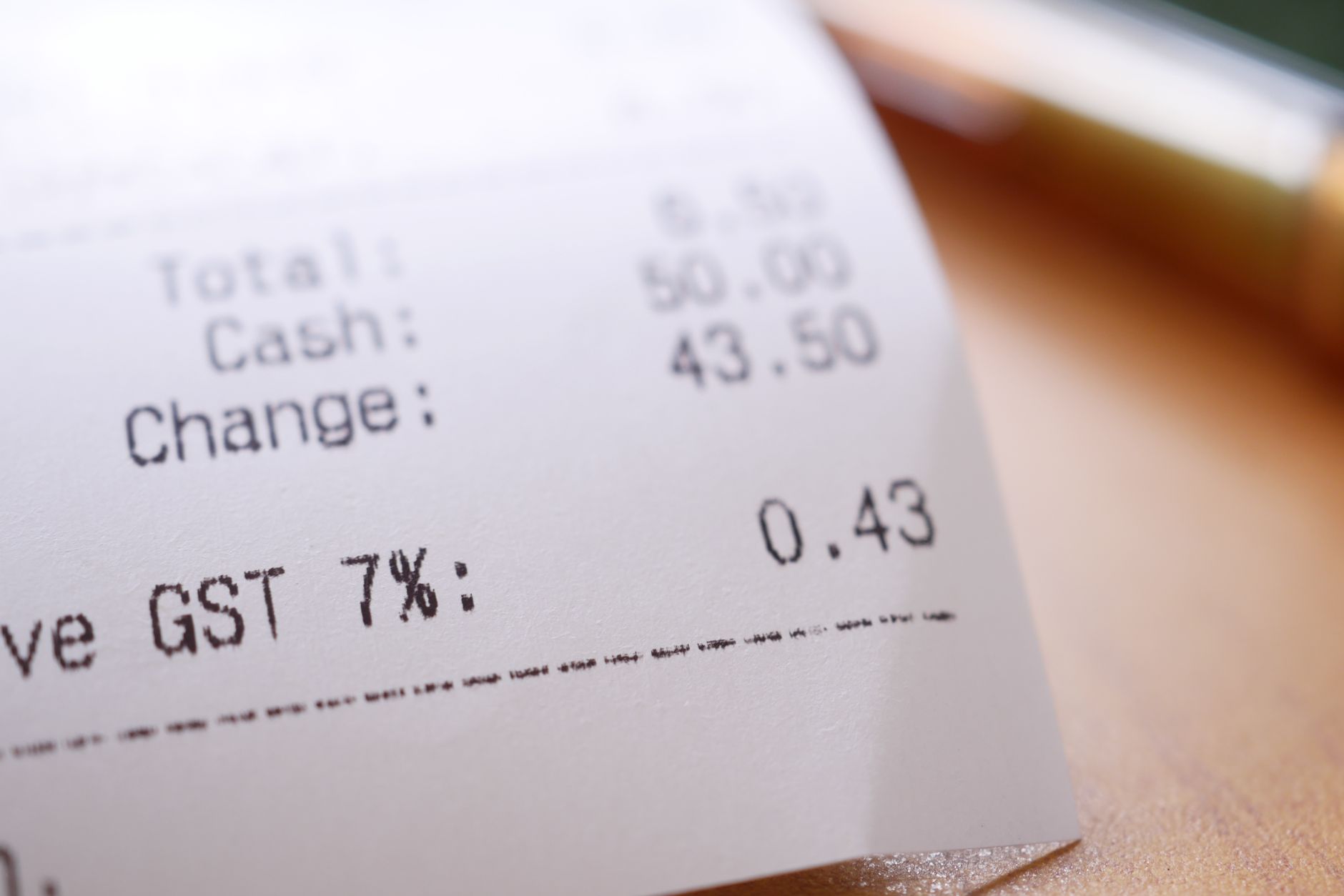
Sales tax is added at checkout — this tool shows the exact total before you pay.
Calculator
Sales tax is a percentage of the price added at the point of sale. The direction matters: adding tax multiplies the price by the rate; removing it requires dividing — because the total already contains the tax baked in.
Tax = Price × (Rate ÷ 100)
Total = Price + Tax
Example: a $100 item at 7.25% — Tax = $7.25, Total = $107.25.
Price = Total ÷ (1 + Rate ÷ 100)
Tax = Total − Price
Example: $107.25 at 7.25% — Price = 107.25 ÷ 1.0725 = $100.00. A common mistake is taking 7.25% of $107.25 ($7.78) — that over-counts.

These are approximate combined averages (state + typical local rate). Five states have no statewide sales tax: Alaska, Delaware, Montana, New Hampshire and Oregon.
| State | ~Combined rate | State | ~Combined rate |
|---|---|---|---|
| Alabama | 9.25% | Tennessee | 9.55% |
| California | 8.85% | Texas | 8.20% |
| Illinois | 8.86% | New York | 8.53% |
| Florida | 7.00% | Washington | 9.38% |
| Oregon | 0.00% | Pennsylvania | 6.34% |
Verify your exact local rate with your state Department of Revenue before filing. Use the dropdown above to load any state instantly.

Shopping and budgeting. Know the real checkout total before you buy — especially for big purchases like electronics or furniture. Expense reports. The remove-tax mode splits a receipt total into the pre-tax amount and the tax your spreadsheet needs. Small business invoicing. The add-tax mode shows the total to charge customers on invoices.
Most states don't tax essential goods like unprepared food, prescription medications, and medical devices. However, the specific exemptions vary dramatically by state — one state might tax clothing while another doesn't. This inconsistency creates compliance challenges for online retailers selling across state lines. Amazon, for example, calculates different totals depending on your shipping address. Similarly, restaurant food and prepared takeout are almost always taxed, whereas groceries are typically exempt. Understanding your state's specific exemptions helps you budget accurately and avoid surprises at checkout.
Following the 2018 South Dakota v. Wayfair Supreme Court decision, online retailers must now collect sales tax based on the buyer's location, not the seller's. This means your online purchase from an out-of-state retailer will include sales tax as if you bought it locally. Use this calculator to estimate totals when shopping online, and keep in mind that displayed prices often exclude tax — your final charge will be higher. Digital products (apps, software, e-books) are treated differently by each state; some tax them fully, others exempt them, and some have intermediate rates.
If you run a business, you must collect sales tax on most goods and some services (the specifics depend on your state). You'll need a sales tax permit, which involves registering with your state revenue department. The seller is responsible for remitting the tax to the state, typically monthly or quarterly. Failure to remit collected tax is a serious offense with penalties and interest. Use the add-tax mode of this calculator to accurately quote customers, and consult a CPA for state-specific filing requirements. Online sellers especially should verify nexus rules — where you're required to collect tax — as it varies by state.
Multiply the price by the tax rate as a decimal. At 7.25%, a $100 item has $100 × 0.0725 = $7.25 in tax, for a total of $107.25. Alternatively: Price × (1 + Rate/100) = Total with tax.
Divide the total by 1 plus the rate as a decimal. For a $107.25 total at 7.25%, the pre-tax price is 107.25 ÷ 1.0725 = $100.00. Do not just take a percentage of the total — that over-counts.
Five states have no statewide sales tax: Alaska, Delaware, Montana, New Hampshire and Oregon. However, some local jurisdictions in Alaska and Montana may charge local sales tax.
No. The total you pay is usually the state rate plus a local city and county rate. This calculator uses combined state averages; check your exact ZIP code rate with your city or county tax assessor for precise figures.
Not always. Many states exempt or reduce tax on unprepared groceries, prescription medicine, medical devices, and sometimes clothing or school supplies. Prepared food, restaurant meals, and alcohol typically face higher rates.
Sales tax is charged once at the final retail sale (common in the US). VAT (Value Added Tax) is collected at each stage of production (used in UK, EU, Canada) and is usually already included in the displayed price to consumers.
Yes, since 2018. If you ship to a customer in a state where you have "nexus" (physical presence or significant sales), you must collect sales tax. This means online retailers must charge based on the buyer's location, not the seller's location.
Use the "Remove tax from total" mode in this calculator. Enter the receipt total and your state's rate, and the calculator shows what the pre-tax price was and how much tax you paid. This is useful for expense reports and accounting.
If you don't itemize deductions, the standard deduction is usually larger. If you do itemize, you can deduct either state income tax OR state and local sales tax (SALT), but not both. Use IRS tables to calculate your sales tax deduction based on your state and income level.